


Bolivia is evaluating integrating Tether’s USDt into its nationwide funds system, a transfer that would mark considered one of Latin America’s most vital stablecoin adoption initiatives because the nation grapples with a persistent scarcity of US {dollars}.
Economic system and Public Finance Minister Jose Gabriel Espinoza advised a press convention on Monday that the federal government is assessing a regulatory framework that will enable USDT to flow into “as simply one other forex,” alongside the boliviano and the US greenback.
In keeping with the Spanish information outlet CriptoNoticias, the framework continues to be underneath evaluate and, if adopted, would acknowledge USDT for on a regular basis transactions, together with funds, financial savings and commerce, with out relying solely on money or the normal banking system.
Espinoza stated any rollout would require a strong regulatory framework and powerful anti-money laundering safeguards as a result of Bolivia stays on the Monetary Motion Process Pressure (FATF) gray listing, which identifies jurisdictions underneath elevated monitoring for deficiencies in stopping cash laundering and terrorist financing.
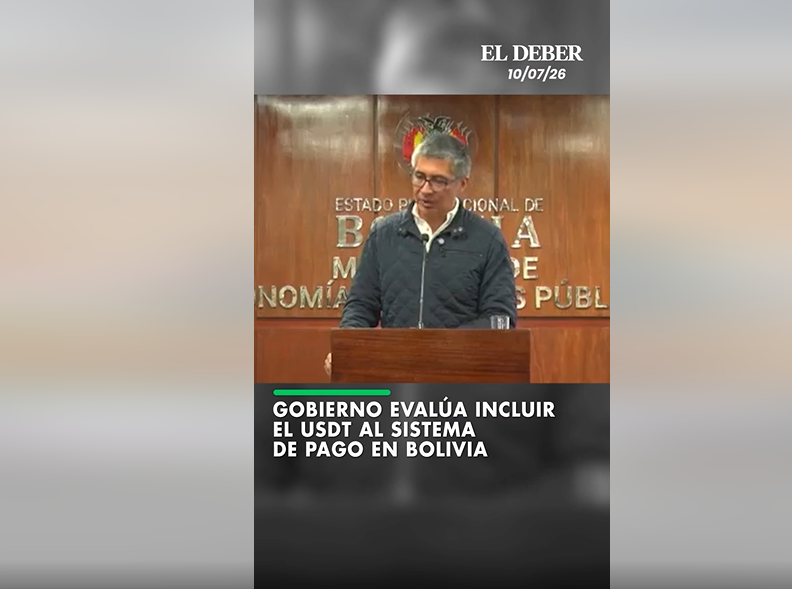
Supply: EL DEBER
The proposal is a part of Bolivia’s broader embrace of digital belongings following the lifting of its longstanding ban on cryptocurrencies in 2024. Since taking workplace in late 2025, President Rodrigo Paz Pereira’s administration has pledged to combine digital belongings into the formal monetary system, paving the way in which for banks to supply crypto-related services and products, together with stablecoin-based accounts.
USDT is the world’s largest stablecoin, with a market capitalization exceeding $184 billion, in line with CoinMarketCap.
Associated: USDT wins funds, USDC wins DeFi as stablecoins diverge: Dune
Greenback scarcity fuels stablecoin push
Bolivia’s stablecoin initiative comes because the nation grapples with a chronic scarcity of US {dollars}, that are extensively used alongside the nationwide forex, the boliviano.
As Reuters reported, Bolivia maintained an official trade price of 6.86 bolivianos per US greenback for purchases and 6.96 for gross sales from 2011 till earlier this yr, when mounting stress on overseas trade reserves pressured the federal government to desert the long-standing peg. The ensuing greenback scarcity fueled the growth of a parallel overseas trade market, the place the greenback traded at a steep premium to the official price.
The widening hole between the official and parallel trade charges has boosted demand for dollar-denominated alternate options, together with stablecoins akin to USDT, which have more and more been used for funds.
Bolivia ranked extremely in Chainalysis’ 2025 analysis of crypto adoption throughout Latin America, with $14.8 billion in whole transaction quantity over a 12-month interval.
Associated: Crypto Biz: How stablecoins discovered their area of interest