



Matt Cassells is all too conversant in the Nice Switch of Stuff. A companion at Toronto-based actual property company Walker Cassells, he has seen “ many years of reminiscences, collections and furnishings ” crammed into the properties of Canadian child boomers .
It’s a problem in his line of labor, he says, as a result of youthful consumers are considering house, favouring open-concept layouts, clear strains and minimalism over litter. The method of emptying and getting ready the house of a downsizing child boomer for extra trendy tastes generally is a months-long endeavour.
The boomers are at the moment within the strategy of passing down an estimated $1 trillion in wealth to their technology X and millennial heirs . However a lot of them are additionally forsaking a dragon’s hoard of clothes, crockery and furnishings, collected over many years. There’s just one drawback: not like their properties and their financial savings, youthful Canadians are much less considering their belongings.
“(The youngsters) will usually preserve among the smaller heirlooms , artwork, sure jewellery, these kinds of issues, however these older huge china hutches and eating room tables, and issues which might be synonymous with the older technology, are likely to not match, each stylistically and simply from a sheer measurement perspective,” Cassells mentioned.
Cory Feinstein, director of operations at Promote My Stuff Canada, a content material and property gross sales market, mentioned tastes have drastically advanced over time.
Demand for collectible figurines, bone china and tremendous crystal has shrunk and furnishings is the hardest promoting class, Feinstein mentioned.
“Youthful generations are (in) a quick, informal financial system, so firms like Wayfair, IKEA, their stuff is much more accessible,” he mentioned. “This huge, clunky furnishings merely simply doesn’t work there.”
It’s a problem which may be distinctive to the newborn increase technology, which got here of age throughout a post-war increase that created large wealth and noticed the flourishing of client tradition in North America.
“You noticed a comparatively unprecedented middle-class accumulation of stuff,” mentioned June Cotte, a professor of selling on the College of Western Ontario’s Ivey Enterprise College.
Child boomers owned larger properties than the generations earlier than them, offering them with the house to build up a lot throughout their lifetimes, she mentioned. Whereas youthful Canadians are more and more residing in smaller properties amid rising cost-of-living points or as a result of way of life variations, making it much less possible for them to proceed the cycle.
“I don’t see the Massive Switch of Stuff taking place once more within the subsequent few many years,” Cotte mentioned.
Noreen Music, president of the Skilled Organizers in Canada, estimates that greater than 30 to 40 per cent of the enterprise for organizers stems from serving to seniors work out what to do with their stuff once they downsize, or their youngsters when their dad and mom die and go away behind so many gadgets.
“Our senior purchasers have a little bit bit extra issue letting go,” mentioned Music, noting a lot of her older purchasers grew up throughout instances of monetary hardship. “The imprint on the older technology is that shortage mentality.”
However, youthful generations are typically much less hooked up to materials gadgets, Music mentioned. Because of this when child boomers downsize (or die), their youngsters aren’t going to carry on to all of their issues.
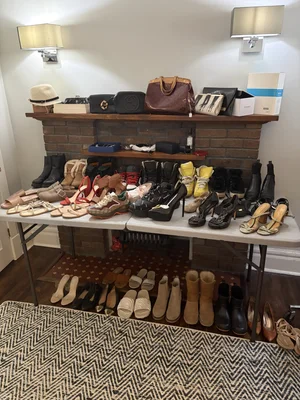
Music mentioned organizers first attempt to discover a house for the gadgets, which might contain property gross sales, consignment shops and even upcycling them for a unique function, earlier than donating to a charity or thrift retailer. The final choice is to ship these things to a landfill.
Cotte, herself a gen Xer , has seen this amassing of fabric gadgets from child boomer dad and mom firsthand, and is actively selecting to de-clutter now to forestall her youngsters from going by way of the identical exhausting strategy of sorting by way of stuff that she went by way of when her dad and mom died.
“ I inherited the job … of eliminating issues ,” she mentioned. Cotte recounted unearthing her mom’s highschool athletic trophies and an assortment of things starting from Led Zeppelin and The Beatles vinyl information to books, artwork and china.
“My sons, who’re gen Z , love among the vinyls,” she mentioned. “However most individuals don’t have CD gamers anymore, (and) we ended up with most likely a whole bunch of CDs from my dad and mom.”
The largest challenge was the furnishings. Cotte’s dad and mom owned a custom-made glass eating room desk and bed room furnishings made by her grandfather, however although the items held sentimental worth, neither she nor her siblings had the house to maintain them.
“It’s an emotional factor to eliminate, and that’s most likely why boomers maintain on (to those gadgets) for thus lengthy,” Cotte mentioned, including that the choice some individuals select is to hire a storage unit to carry onto stuff they can’t match of their properties.
The availability of recent self-storage house in Canada hit a file excessive of two.3 million sq. toes final 12 months, in response to information from business actual property agency Avison Younger (Canada) Inc. Demographic elements, resembling Canada’s growing old inhabitants downsizing from larger areas and affordability pressures resulting in a pattern towards renting over homeownership and smaller common condo sizes in new builds, are conserving the event pipeline sturdy, mentioned Antonio Balogh, Avison Younger’s senior nationwide analyst, in an e-mail.
Nevertheless, these items, relying on measurement and placement, can price a whole bunch of {dollars} a month to hire, which might develop into a major monetary dedication over the long run.
That mentioned, there’s a marketplace for good-quality and smaller staple items. Whereas older Canadians search for locations to eliminate their belongings, youthful generations grappling with price of residing issues are turning to the thrift retailer and resale market to buy secondhand gadgets at low cost costs.
April McInnes, a 26-year-old graduate scholar at Queen’s College, in Kingston, Ont., mentioned “virtually every part” in her condo has been bought secondhand off Fb Market, from her bedframe to her leather-based desk chair.
McInnes mentioned she and plenty of of her friends who thrift or purchase gadgets secondhand are primarily motivated by funds. “Most graduate college students that I spend my days with are additionally on a restricted price range, so they have an inclination to succeed in towards discounted gadgets, and we all know for a proven fact that we will discover that on the thrift retailer.”
However whereas she hunts for a wide range of low cost secondhand items, together with books, blazers, house decor and puzzles, she isn’t snapping up one thing giant resembling a family-sized eating room desk.
“As a result of I’m so restricted by house in my condo … I’m definitely not looking for these larger gadgets,” McInnes mentioned.
An April survey from non-profit Habitat for Humanity discovered greater than half of Canadians aged 18 to 34 plan to thrift or purchase pre-owned gadgets this 12 months, with prime drivers together with the necessity to economize (62 per cent), the fun of the hunt (31 per cent) and do-it-yourself tasks (26 per cent).
The DIY drive might give some gadgets a brand new house, Ivey’s Cotte mentioned, as thrifting can even attraction to a phase of youthful Canadians considering sustainability.
Lisa Voycey, director of Habitat for Humanity Canada’s ReStores, which function non-profit donation centres and shops for house items, mentioned she has seen some youthful consumers upcycle gadgets for various functions, resembling remodeling stitching tables into house workplace desks and octagonal aspect tables from the Seventies into pet beds.
Ivey’s Cotte expects the pattern of youthful individuals expressing curiosity in sure gadgets from earlier generations “will most likely proceed without end,” however there’s one other issue at play that would make this switch of products extra distinctive to the current second and fewer interesting in future many years.
Most of at this time’s mass-produced gadgets aren’t meant to final for a very long time, Cotte mentioned. “My dad and mom had the identical toaster for 30 years — I don’t suppose I’ve had a toaster final greater than 5.”
Realtor Cassells mentioned he has seen some sellers attempt to eliminate their extra belongings on their very own, resembling itemizing them on Fb Market or different resale websites, although this will develop into a burdensome job. Some companies, resembling his, co-ordinate with professionals to ship gadgets to donation centres or prepare for property and content material gross sales.
Hillary Doukas, managing director of Toronto-based Le Grotté, which organizes property gross sales at a fee fee of 35 to 50 per cent, mentioned a fter the sale concludes, her firm both donates or disposes of any gadgets that stay. Nevertheless, it may be “shockingly tough” to search out charities that settle for giant furnishings, she added.
Simply throwing issues away can even price cash. Most municipalities cost dump charges, or tipping charges, for bringing hundreds to native waste services. Junk elimination is another choice, although these companies can price a whole bunch of {dollars}, relying on the scope of the cleanout.
Probably the most difficult side of eliminating these things, although, is addressing the emotional aspect of letting go, mentioned Music. “It isn’t actually concerning the stuff, it’s about serving to individuals transfer ahead.”
• E mail: slouis@postmedia.com