


Pricey mates, welcome to the March, starting of spring, greening of the 12 months, version of the Mutual Fund Observer. We’re glad you’re right here.
Each semester, I’m reminded that the jeremiads are incorrect.
On this case, they’re the thousand informal, caustic dismissals of the technology now sitting in faculty school rooms: addled, self-absorbed, screen-enslaved, and misplaced, we’re informed. I’ve heard the fees. I’ve learn the analysis. I fear concerning the youngsters.
Then I stroll into the room with them, and the story modifications.
This week, the query in Comm 370, my Comm & Rising Applied sciences class, was one which I’d heard earlier than however that has turn into sharper recently: Are we doomed?
She wasn’t being theatrical. She had been studying about technological affordance and neuroplasticity, the way in which a expertise quietly reshapes not simply our habits however our brains, bending us towards no matter it makes best till the bend turns into everlasting. She had been enthusiastic about path dependence, about selections made casually that prove to haven’t any exit. The analysis on our growing dependence on AI didn’t assist.
It was a very good query. I want I had a greater reply.
What I had was this: “It will depend on what you select. It will depend on what we select. And our most necessary selections start with the phrase ‘no.’ As in, ‘No, I’m not doing it simply because everybody else is. No, I’m not responding to boredom or stress by sinking right into a digital world. No, I’m not setting down a guide as a result of my laptop computer and its 27 tabs are simpler.’ As a result of should you don’t be taught to say ‘no’ now when it’s simple, and the stakes are small, you by no means will.”
“No” can also be the primary phrase spoken by the world’s most brave individuals.
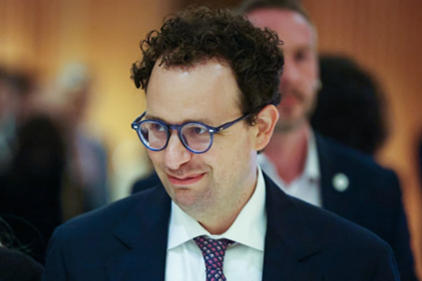 After which, as a result of the universe sometimes offers, I had an unlikely illustration: a man who appears to be like like he wandered off a Seinfeld set the place he performed the comedian guide store proprietor however who co-founded and runs Anthropic, an organization that builds synthetic intelligence, who was handed an ultimatum by Secretary Hegseth, and who mentioned, merely and quietly: “No.”
Dario Amodei. I’m positive his actual phrases to Secretary Hegseth have been extra measured, and but their results, and the braveness they took, have been fairly the identical. Mr. Amodei is accountable for an AI generally known as Claude, essentially the most personable and certain most gifted creature of his type. The core precept for Amodei and his fellowship is each hopeful and clear-eyed: “At Anthropic, we construct AI to serve humanity’s long-term well-being.” They’ve each created and compromised a “framework for managing catastrophic dangers from superior AI methods.” And since life is difficult and selections are onerous, that very same week, Anthropic quietly revised its personal security commitments, abandoning a tough pledge by no means to coach extra succesful AI with out confirmed safeguards in place. The rationale was trustworthy if uncomfortable: unilateral restraint in a race advantages solely these with no restraint.
Two calls for made by the self-styled Secretary of Battle (legally, he’s nonetheless Secretary of Protection, however a September 2025 Govt Order allowed him to name himself, and his division, “of Battle,” a title that carries the identical authorized weight as Leonardo diCaprio’s declaration from the prow of the Titanic, “I’m king of the world!”) and rejected by Amodei. The calls for have been that Claude be allowed for use for “the mass home surveillance of Individuals and absolutely autonomous weapons” (Anthropic assertion, 2/27/2026) … or else.
Mr. Amodei did the quietly outstanding. He mentioned “no.” He didn’t preen, didn’t strut for the cameras, didn’t howl by means of the night time on social media, didn’t rigorously regulate his make-up earlier than threatening “to make an instance” of those that dared problem him. He merely mentioned “no,” and went residence.
That day, the administration orchestrated a punishment marketing campaign in opposition to Anthropic, declaring them to be a nationwide safety threat, ending their authorities contracts, and starting inquiries into using Claude by any authorities contractor. A day later, Mr. Hegseth oversaw an assault on a sovereign nation and the assassination of their theocratic chief. And Claude surged to turn into essentially the most downloaded app from the Apple Retailer, breaking all-time data on daily basis that week. It climbed quickly within the rankings, shifting from exterior the highest 100 to No. 1 by the tip of February.
I believe that the American individuals simply mentioned, “No.”
I’ll let my youngsters know.
On this month’s Observer …
Our colleague Lynn Bolin shares Hope Is Not a Good Technique, Lynn’s periodic reminder that markets have reminiscence even when traders don’t. Drawing on a latest historical past of American finance, he maps the inflation-adjusted returns of the S&P 500 throughout ten durations since 1929 and arrives at a sobering conclusion: the distinctive features most traders deal with as regular clustered in simply two eras, neither of which describes in the present day’s market. His counsel is just not panic however preparation — modest money reserves, real draw back safety, and resistance to the snug assumption that the final three years symbolize a brand new regular slightly than the late innings of a cyclical bull.
Perpetual Revenue for Dummies, additionally by Lynn, solutions a pal’s request for a easy, sturdy portfolio that generates regular withdrawals, retains tempo with inflation, and survives each recessions and rising charges with out requiring its proprietor to be an expert. His answer outperforms Vanguard Wellesley Revenue over ten years whereas sustaining decrease drawdowns — not by taking extra threat, however by diversifying the sources of earnings in order that interest-rate sensitivity and recession sensitivity partly offset one another. A portfolio you may really dwell with, in each senses of the phrase.
In New Yr’s Decision #2: Don’t Underwrite Yachts, I elevate two prospects: (1) the time period “crazy-rich” has gotten fully too literal recently and (2) you do have choices, although not frictionless ones, for stepping again and reasserting a level of steadiness … no less than within the sliver of the world you might have management over.
Extraordinary occasions (aka “now”) name for extraordinary thoughtfulness. In Constructing the Insulated Portfolio, we use the extraordinary instruments accessible by means of MFO Premium to reply the query: Are these funds incomes their spot in a risk-conscious portfolio? Excellent news: 80% are. Different information: two promising funds have turned persistently south, measured by each sturdy returns and draw back resilience. Chip has rolled out the chopping block.
The oldsters at Disciplined Development Traders run a persistently sturdy balanced fund. In late February, they launched a second fund, Disciplined Development Traders Fairness Fund, that (a) is a conversion of a long-running restricted partnership and (b) embodies simply the fairness sleeve of the DGI flagship fund. It’s an attention-grabbing old-school product.
And, as all the time, The Shadow shares the document of the funding business’s most up-to-date twists, turns, and twerks, in Briefly Famous. That features a pretty consequential piece on the renaissance of Matthews Asia, a very good group that appears unwilling to accept half-measures.
Investing in a Fragile World
“Yeah, there’s one factor. My very own morality. My very own thoughts. It’s the one factor that may cease me.” — Donald Trump, interview with The New York Occasions, January 8, 2026, when requested concerning the limits of his energy
One thing structural has modified, and the usual playbook hasn’t caught up.
For 3 a long time, the wise technique was reassuringly easy: purchase broad U.S. index funds, maintain them by means of turbulence, and belief that institutional stability would ultimately reward endurance. That technique labored as a result of the underlying assumptions held: falling rates of interest, benign inflation, American hegemony because the organizing precept of worldwide commerce, and a rules-based worldwide order that, nonetheless imperfect, constrained the worst impulses of highly effective actors.
These assumptions are actually in query concurrently.
Ray Dalio describes a late-stage breakdown of the long-term debt cycle compounded by eroding geopolitical order. Mohamed el-Erian sees structural fragility masked by floor calm, a world the place shocks arrive extra incessantly, and the shock-absorbing infrastructure is itself weakening. Oaktree’s Howard Marks (Memo, 10/2023) calls it a “sea change.” They’re describing the identical factor from totally different angles: we’ve left one regime and entered one other, and the transition is neither easy nor temporary.
Mr. Marks’ November 2025 memo revisiting the psychology of threat cycles, put it plainly: the worst selections are made in one of the best of occasions, when the potential of loss has “receded from consciousness” and lacking out on features feels extra harmful than dropping capital. That description matches 2025’s speculative surge with uncomfortable precision.
For prudent traders, this creates a particular downside. Broad U.S. index funds now focus huge bets in a handful of corporations whose valuations assume a really explicit, very optimistic future. When the S&P 500’s high 5 holdings exceed 25% of whole market worth, “the market” is just not the diversified instrument it as soon as was.
The repositioning that is sensible on this surroundings isn’t panic. It’s recalibration towards what has all the time labored in tougher occasions: high quality corporations bought at affordable costs, real geographic diversification, a severe consideration of property past equities, and decreased dependence on the continued ascent of American shares which can be already priced for perfection.
Ruchir Sharma famous lately within the Monetary Occasions that high quality shares simply suffered one among their worst relative declines in a long time … and traditionally, such durations have preceded their strongest returns. The case for affected person, quality-oriented investing isn’t new. In a fragile world, it’s merely extra pressing (“The perfect time to purchase high quality shares is now: A generational alternative in in any other case bubbly markets,” Monetary Occasions, November 30, 2025).
The traders who will fare greatest aren’t those that predicted the fragility. They’re those that constructed portfolios that don’t require stability to generate acceptable returns.
Pondering in a fragile world
In our “yachts” essay this month, we tackle the price of frictionless transactions, ones which can be really easy that they turn into no-brainers. Actually. Another “purchase now,” then again to work. Another add to Instagram. Another minute scanning earlier than I get again to work … I imply it this time.
These of us who educate and analysis about such phenomena use phrases like “technological affordance” as we clarify what makes the slippery slope slippery. The widespread unfold of generative AI makes the problem higher since useful, amiable (some say “sycophantic”) AI name you just like the Sirens of Greek delusion. The time period in circulation is “cognitive offloading,” letting the AI do the considering (and writing) for you.
However there’s one other mannequin: a partnership that results in “cognitive augmentation.” It’s a collaborative strategy through which a human, deeply investing in no matter they’re doing or writing about, has a reasonably disciplined accomplice to whom they’ll flip and ask, “What am I lacking right here? Is there a voice that I’m not attending to? Are my arguments stumbling over each other?” Extreme deference is just not an intrinsic aspect of an AI persona; it’s a default that may be talked away. (Claude has, and attends to, very clear directions about my wishes on the topic.) That’s a tougher mannequin, one which builds friction into the system; that’s, it’s designed to make issues slower, tougher, extra deliberate … and higher (Alexandra Pattillo, “Can ‘friction-maxxing’ repair your focus?” BBC.com, 2/27/2026).
Howard Marks, it seems, arrived on the identical conclusion independently. He begins his most up-to-date Memo (The AI Hurdle Forward, 2/26/2026) with a mirrored image on Claude, collaboration, friction, and the power to be shocked.
I lately returned to [some interesting techies in their thirties and forties] to comply with up on my December memo (“Is It a Bubble?”). As a part of that course of, somebody recommended I ask Claude, Anthropic’s AI mannequin, to create a tutorial explaining synthetic intelligence and the modifications which have taken place within the final three months. I did so, and it gave me an excellent deal to work with. This ensuing memo is meant as an addendum to December’s. A lot of it is going to recap Claude’s 10,000-word essay, to which I’ll add a number of observations of my very own. Within the course of, I’ll spotlight some phrases that have been new to me and is likely to be new to you. I may have saved myself plenty of time by asking Claude to jot down this memo, however I made a decision to not, as a result of I take into account placing phrases on paper an enormous a part of the enjoyable. I’ll, nonetheless, quote liberally from Claude’s work product. That’ll be the supply of all quotations that aren’t in any other case recognized.
Earlier than I begin in, I wish to attempt to talk the extent of awe with which I considered Claude’s output. It learn like a private notice from a pal or colleague. It made reference to issues I’ve talked about in previous memos, like the ocean change in rates of interest and the pendulum of investor psychology, and it used them in metaphors associated to AI. It argued logically, anticipated factors I’d make in response, injected humor, and bolstered its credibility by candidly acknowledging AI’s limitations, simply as I’d do. I’ve requested AI questions earlier than and gotten solutions again, however I’ve by no means acquired a personalised clarification like I did on this case.
The individuals who will fare greatest within the decade forward, the grown-ups, aren’t those that denounce AI nor those that deal with it as the most recent frictionless shortcut. They’re those that perceive that one of the best relationships – parental, marital, mental – are constructed on friction, on the generally tough, usually joyful work of considering collectively.
The etymology that I couldn’t afford to say above
A part of the rationale MFO takes so lengthy to compose is that there are such a lot of sights to cease and see alongside the way in which, lots of which I dasn’t share. (Cool phrase, “dares not,” Center English, beloved of the Pennsylvania Dutch.) The one I dasn’t add to this month’s intro is that “no,” like “brother” or “father,” is one among our most historic phrases, rising over 6,000 years in the past, making its adamant approach virtually unchanged into virtually each European language, an idea so central and so common that it brooks no alteration.
PS, Chip reviews that “no” is mostly the primary phrase spoken by toddlers, the world’s most unbiased creatures.
Thanks, as ever …
To The Trustworthy Few whose month-to-month assist retains the lights on and helps up: Gregory, William, William, Brian, David, Doug, Altaf, and the great people at S & F Funding Advisors. Thanks additionally to David from Vail, Radley from Cupertino, Thomas from Williamsburg, RHG Advisors, Wayne, and the Vaidya Household Fund, who all added to our assist prior to now month. We recognize you all!
Regardless of a reputation honoring Mars, the god of battle, we want you a peaceable month and joyful greening of your backyard.
Again quickly!