


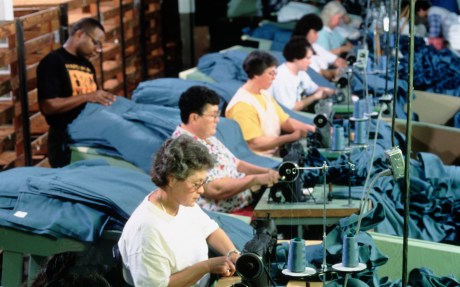
How has the latest implementation of tariffs affected small companies? Because of lack of knowledge, little is thought about this subject. On this Liberty Road Economics submit, we use information from the 2025 version of the Small Enterprise Credit score Survey (SBCS) to discover this query for companies nationally and within the Second District (outlined, for the aim of this research, as New York, New Jersey, and Connecticut). We discover that almost all of nationwide companies within the items and retail sectors reported experiencing monetary challenges resulting from tariffs in 2025, with even bigger shares of regional companies doing so. In response, about 80 p.c of nationwide and regional companies handed on a minimum of a number of the greater prices of imported inputs to prospects, whereas about 60 p.c absorbed a number of the prices, as many companies did a few of each. Companies that confronted better tariff challenges in 2025 had been extra pessimistic about employment and revenues in 2026.
Publicity of U.S. Small Companies to Imported Enter Costs
Whereas the biggest 1 p.c of U.S. companies account for 90 p.c of worldwide commerce by worth, the majority of exporting companies are small; the position of small companies is even bigger if we account for oblique exports (for instance, small companies promoting by way of on-line intermediaries). Amongst SBCS survey contributors nationally, solely about 30 p.c of U.S. items companies and 20 p.c of retail companies reported gross sales to worldwide prospects in 2024. In distinction, about 70 p.c of products companies and 80 p.c of retail companies reported utilizing a minimum of some inputs sourced from outdoors the U.S. in 2024, whereas simply 40 p.c of providers companies did so. Regional agency surveys point out that 90 p.c of producers and 75 p.c of providers companies import some items. Thus, U.S. small companies within the items and retail sectors have a significant publicity to greater prices of imported inputs from greater tariff charges, although they’re far much less reliant on promoting to international prospects. This level is vital as enter tariffs had been proven to have bigger results on productiveness than output tariffs.
Incidence of Tariff-Associated Prices on Small Companies
Survey contributors within the 2025 SBCS version had been requested whether or not “elevated prices related to tariffs” and “elevated price of products, providers, and/or wages (inflation)” constituted monetary challenges over the previous twelve months. The chart under reveals {that a} substantial share of small companies reported tariff-related prices as a problem in 2025. Nationally, the share of companies reporting tariff-related challenges was 55 p.c within the items sector, 67 p.c within the retail sector and 34 p.c within the providers sector; for regional companies, the corresponding shares had been 62 p.c, 72 p.c, and 44 p.c, respectively.
Small Companies Confronted Substantial Tariff-Associated Challenges in 2025
Notes: The chart plots the weighted percentages of respondents from employer companies in items, retail and providers sectors deciding on “Elevated prices related to tariffs” as a monetary problem skilled during the last twelve months. Responses are weighted on a wide range of agency traits with a view to match the nationwide inhabitants of employer companies. The survey was fielded between September and November of 2025. Complete variety of respondents: 6,500. Complete variety of respondents within the Second District: 976.
Throughout all sectors, 80 p.c or extra of companies reported challenges resulting from common price will increase, elevating the priority that respondents could have doubtlessly misattributed broad inflation results to tariffs. Consequently, we evaluate solutions to the tariff and inflation questions to higher determine tariff-related price pressures. As well as, we evaluate responses of companies within the items and retail sectors to these within the providers sector, because the former are extra uncovered to tariff-related prices, as proven within the part above. The chart under reveals that, relative to the providers sector, companies within the items and retail sectors had been extra prone to be challenged by tariff- than non-tariff-related prices, indicating that respondents accurately recognized tariff-related challenges.
Small Companies in Items and Retail Sectors Have been Comparatively Extra Challenged by Tariffs than Non-Tariff Prices in 2025
Notes: The chart plots the weighted percentages of respondents from employer companies in items and retail sectors, relative to these within the providers sector, deciding on “Elevated prices related to tariffs” and “Elevated price of products, providers, and/or wages (inflation)” as monetary challenges skilled during the last twelve months. Responses are weighted on a wide range of agency traits with a view to match the nationwide inhabitants of employer companies. The survey was fielded between September and November of 2025. Complete variety of respondents: 6,500. Complete variety of respondents within the Second District: 976.
Did tariff-related challenges lead to greater imported enter prices? About 80 p.c of companies nationally reported that their imported enter costs elevated in 2025 relative to 2024. Regression outcomes present that reporting tariff-related challenges has a excessive and statistically vital affiliation with experiencing greater costs of inputs sourced outdoors the U.S. however reporting broad inflation challenges doesn’t. In different phrases, companies with tariff-related challenges seemingly paid greater imported enter costs in 2025. Our findings align with analysis exhibiting that mid-sized companies (these with 50-499 staff) paid sharply greater tariffs in 2025.
Responding to Larger Imported Enter Prices
The SBCS requested companies what actions (if any) they took in response to greater imported enter costs: go on to prospects, take in prices or take different mitigating actions (for instance, change suppliers or timing of purchases or relocate manufacturing to U.S.). About 80 p.c of products and retail companies, nationally and regionally, reported passing on a minimum of a number of the prices to prospects. In line with partial pass-through of tariff prices, about 60 p.c of those companies reported absorbing a minimum of a number of the price will increase internally. Thirty-six p.c of products companies and 43 p.c of retail companies nationally reported combining each approaches, whereas a smaller share of regional companies did in order properly.
Giant companies could mitigate the incidence of upper enter costs from tariffs by authorized means and, extra usually, have better means to take care of value markups. Smaller, much less worthwhile companies with fewer sources are much less in a position to take action. Regression outcomes present that older and extra worthwhile small companies had been extra inclined to go on prices and fewer inclined to soak up prices. Older companies, by advantage of getting survived the early bankruptcies typical of different small companies, could have extra pricing energy, simply as worthwhile companies do. In line with this concept, we discover that older and extra worthwhile companies had been additionally extra in a position to improve costs in response to weak gross sales.
Companies Largely Handed on Larger Imported Enter Prices to Clients
Notes: The chart plots the weighted percentages of respondents from employer companies in items and retail sectors deciding on “Handed greater prices on to prospects” and “Absorbed price will increase internally” as actions taken in response to elevated enter prices. Responses are weighted on a wide range of agency traits with a view to match the nationwide inhabitants of employer companies. The survey was fielded between September and November of 2025. Complete variety of respondents: 2,006. Complete variety of respondents within the Second District: 293.
How Did Tariff Challenges Have an effect on Expectations of Companies’ Prospects in 2026?
Analysis reveals that bigger declines in inventory costs on tariff-announcement days in 2018-19 had been related to decrease income, employment, and labor productiveness within the following two years. What had been companies’ expectations about their performances following greater tariffs in 2025? Within the SBCS survey, companies reported their expectations for employment era and income efficiency in 2026. We have now proven beforehand that regional small companies had been unusually pessimistic about their 2026 prospects. We now discover that nationwide companies reporting tariff-related challenges had been much less prone to anticipate both elevated revenues or employment, even after accounting for a wide range of agency traits akin to their age, revenues, profitability, and areas. In distinction, broad inflation considerations had been unrelated to employment and income expectations. Whereas companies’ income expectations relate to each home and export gross sales, small companies report individually that, by a big margin, they anticipate their export gross sales to lower moderately than improve in 2026.
Summing Up
Small companies within the nation and within the area are weak to greater costs of imported inputs. Utilizing survey information, we present that small companies had been significantly challenged by greater tariffs in 2025 to which they largely responded by passing on greater tariff prices to their prospects. Tariff-related challenges are related to greater imported enter prices and better pessimism about producing employment and revenues in 2026.

Will Aarons is a analysis analyst within the Federal Reserve Financial institution of New York’s Analysis and Statistics Group.

Asani Sarkar is a monetary analysis advisor within the Federal Reserve Financial institution of New York’s Analysis and Statistics Group.
Easy methods to cite this submit:
Will Aarons and Asani Sarkar, “Impact of Tariffs on U.S. Small Companies,” Federal Reserve Financial institution of New York Liberty Road Economics, July 9, 2026, https://doi.org/10.59576/lse.20260709
BibTeX: View |
Disclaimer
The views expressed on this submit are these of the writer(s) and don’t essentially replicate the place of the Federal Reserve Financial institution of New York or the Federal Reserve System. Any errors or omissions are the duty of the writer(s).